
What Insurance Does a Brisbane Welder Need?

Welding and mobile fabrication work sits at an unusual intersection of risk: you're often on someone else's site, using hot work processes near flammable materials, operating mobile plant and trailers between jobs, and in many cases supplying or fixing parts that other trades and builders rely on downstream. A single job such as fabricating a balustrade for a Brisbane apartment renovation, can expose you to public liability, products liability, and equipment risk all at once.
If you're a mobile welder or run a small fabrication contracting business anywhere across Brisbane and Southeast Queensland, here's what to actually think about when it comes to cover.

Common Claim Scenarios for Brisbane Welders
On-site fire risk during hot work. A welder is contracted to carry out repair welding on a steel awning frame at a commercial property in Fortitude Valley. Sparks from the angle grinder and welding process ignite nearby stored packaging material, causing fire damage to the client's premises and stock. The property owner pursues the welder for the cost of the damage.
Structural failure of fabricated work. A mobile welder fabricates and installs a set of external stairs and a landing for a Logan homeowner. Some months later, a weld fails and the stairs partially collapse, injuring a visitor to the property. The homeowner and the injured party both look to the welder for the resulting costs.
Damage to a client's vehicle or equipment while on-site. A welder is engaged to repair a boat trailer chassis at a marine yard in Redland Bay. While manoeuvring the trailer into position for welding, it's dropped, damaging the client's boat sitting nearby. The yard owner claims for repair costs.
Theft or damage to mobile welding equipment. A welder's ute and trailer, carrying a welder, generator, and gas bottles, are broken into overnight while parked at a Brisbane job site, with tools and equipment stolen. The welder is left needing to replace the equipment before the next job can proceed.
Insurance Covers a Brisbane Welder Should Consider
Public Liability Insurance
Public Liability Covers claims for third-party property damage or injury arising from your work, such as fire damage caused by hot work, or injury caused by a structural failure of something you've fabricated or installed. This is typically the non-negotiable cover for anyone doing on-site welding work, and many head contractors and site managers will require proof of a minimum limit (commonly $10 million or $20 million) before allowing you on-site.
For welders specifically, the hot work component of the job is what tends to attract the closest underwriting attention. Grinding, cutting, and welding all produce sparks and heat capable of igniting nearby materials, and insurers will typically ask about the environments you work in, as a workshop with proper fire controls in place reads very differently to underwriters than frequent work inside occupied commercial premises or near flammable stock. It's worth checking whether your policy includes cover for "hot work" as standard or as an add-on, since some general trades public liability policies exclude or restrict it, which can leave a real gap for anyone doing welding as a core part of their business rather than an occasional task.
It's also worth understanding the difference between "occurrence-based" and "claims-made" liability wording, since welding claims, particularly structural failures, can surface months or years after a job is completed. An occurrence-based policy responds based on when the incident happened, which is generally the more favourable structure for tradespeople, since it means historical work stays covered even if you later change insurer or stop trading. Site-specific certificates of currency are also commonly requested before starting a job, so it's worth confirming with your broker how quickly these can be issued when a new contract requires proof of cover.

Products Liability Insurance
Often bundled with public liability, but worth understanding separately: this covers claims arising from a fabricated product or completed weld failing after the job is finished, rather than damage caused during the work itself. Given welders regularly supply structural or load-bearing components (railings, brackets, staircases, gates), this is a meaningful exposure to have covered.
The practical distinction matters because public liability and products liability respond to different points in time. Public liability typically covers an incident that happens while you're actively on-site carrying out the work; products liability picks up once the job is complete and something you supplied fails afterwards, sometimes years later.
A balustrade weld that gives way at a rental property eighteen months after installation, for example, is a products liability matter rather than a public liability one, even though the two covers are usually bought as a single combined policy. Underwriters will often ask about the nature of what you fabricate (decorative versus structural or load-bearing), the industries you supply into, and whether any of your work is used in high-risk applications such as scaffolding, balustrading, or plant and equipment, since these all affect both premium and the limit you're likely to need. If you supply fabricated components to builders or other trades who then install them, it's also worth clarifying whether your cover extends to claims arising after the item has been on-sold or incorporated into someone else's finished work, since this is a common point of confusion and occasionally exclusion.
Tools and Portable Equipment Insurance
Tools and Portable Equipment Insurance covers welders, generators, grinders, gas bottles, and other portable equipment against theft, accidental damage, or loss, whether in transit, on-site, or in storage. Mobile welders carrying significant equipment in a ute or trailer are a common target for opportunistic theft, and equipment often isn't cheap to replace on short notice.
Cover generally falls into two categories worth checking: named/scheduled items above a certain value (a good MIG or TIG welder, for instance, can easily run into several thousand dollars and may need to be individually listed) and a broader "unspecified tools" sub-limit for smaller items like grinders, clamps, and hand tools. It's worth reviewing this sub-limit against what you'd actually need to replace, since a default figure set by an insurer may not reflect the true value of a well-equipped mobile rig.
Cover for gas bottles is also worth confirming separately, since these are sometimes rented rather than owned, and rented equipment may need to be added specifically or covered under a different section of the policy. Many policies also include an "in transit" component covering equipment while it's being carried in a vehicle or trailer between jobs, which is precisely when a lot of theft and accidental damage claims occur but it's worth checking whether there are security requirements attached (such as equipment being locked in a canopy or trailer overnight) as a condition of cover.
Commercial Motor / Trailer Insurance
Commercial Motor Insurance provides cover for the vehicle and any specialised trailer used to transport equipment or fabricated items between sites. This sits separately from your personal vehicle policy if the vehicle is used for business purposes. A personal motor policy will often exclude use of a vehicle for business purposes altogether, or restrict cover if the vehicle is carrying tools, equipment, or fabricated goods as part of a trade, which makes this a genuine gap rather than a minor technicality for most mobile welders.
Custom trailers, especially those fitted out for carrying welding plant, gas bottles, or fabricated products, may also need to be separately declared and valued, since a standard motor policy won't automatically extend full cover to a modified or purpose-built trailer. It's worth confirming whether your policy covers "carried goods" — that is, the tools, equipment, and materials being transported, as distinct from the vehicle itself — since these are sometimes covered under motor insurance and sometimes need to sit under the tools and equipment policy instead, and getting this split wrong can leave equipment uninsured in transit.

Contract Works Insurance
Relevant where a welder is contracted as part of a larger construction project, covering fabricated work-in-progress against damage before it's completed and handed over, such as fire, storm, or accidental damage. This type of cover is typically arranged per project rather than as an annual policy, and the sum insured is generally based on the contract value of the work being carried out. It becomes particularly relevant on larger jobs such as structural steel fabrication as part of a commercial build, for example, where work-in-progress could be exposed to site risks like fire, storm damage, or theft of partially completed work before a principal contractor takes handover.
On some projects, the head contractor's own contract works policy may already extend to cover subcontractors, so it's worth checking the head contract and any insurance clauses before assuming a standalone policy is needed, since duplicating cover unnecessarily adds cost without adding protection.
Personal Accident & Injury
Welding is physically demanding work, and many welders are sole operators or small partnerships without paid sick leave. Personal Accident & Injury Insurance covers a portion of income if you're unable to work due to injury or illness; including welding-related conditions such as repetitive strain or exposure-related issues.
Policies typically pay a percentage of insured income (commonly up to 85%) after a chosen waiting period, with benefit periods ranging from a year to multiple.
For welders, it's worth thinking specifically about occupational exposures that build up gradually rather than resulting from a single incident; conditions like welder's flash, respiratory issues from fume exposure, and musculoskeletal injuries from repetitive positions are common enough in the trade that it's worth checking how a policy defines and treats gradual-onset conditions versus sudden injury, as some policies treat the two differently.
Given many welders operate as sole traders without access to WorkCover-style protections that an employee would have, income protection is often one of the more overlooked but financially significant covers to get right.
Indicative Cost Table
Cover | Typical Starting Premium (Annual) | Notes |
Public Liability ($10M) | $700 – $1,800 | Varies with turnover, hot work exposure, height/scaffold work |
Products Liability | Often bundled with PL | Standalone pricing depends on structural vs decorative fabrication mix |
Tools & Portable Equipment | $400 – $1,200 | Depends on total insured value and theft history in the area |
Commercial Motor (ute/trailer) | $900 – $2,500 | Depends on vehicle value, trailer type, driving history |
Contract Works | Project-based | Typically quoted per contract value |
Income Protection | $600 – $2,500+ | Depends on age, income, waiting/benefit period |
Figures are indicative starting points only and will vary based on individual circumstances, claims history, and cover limits selected.
Why Brisbane Welders Work With a Broker
Welding sits across several underwriting categories depending on what you actually do; structural fabrication, ornamental/decorative work, mobile repair, or workshop-based manufacturing and insurers price these differently. A broker can help make sure your policy wording actually reflects the work you do (rather than a generic "welder" occupation code that may exclude structural or load-bearing fabrication), and can negotiate on public liability limits where head contractors have specific site requirements.
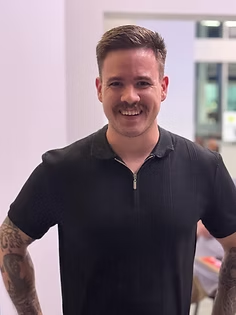
Founder & Director, Monarch Insurance Brokers
Tim Jones is the Founder and Director of Monarch Insurance Brokers, a Brisbane-based brokerage serving trade, construction, SME, and personal lines clients across Queensland. Holding Tier 1 and Tier 2 RG146 qualifications, Tim brings hands-on experience across commercial insurance broking, working directly with clients to structure policies around the specific risks of their industry and business.
This information is general in nature and does not take into account your personal objectives, financial situation, or needs. Monarch Insurance Brokers is in the process of becoming an Authorised Representative. All insurance products and services referred to above are currently arranged through Morgan Insurance Brokers Pty Ltd, AFSL 70026

